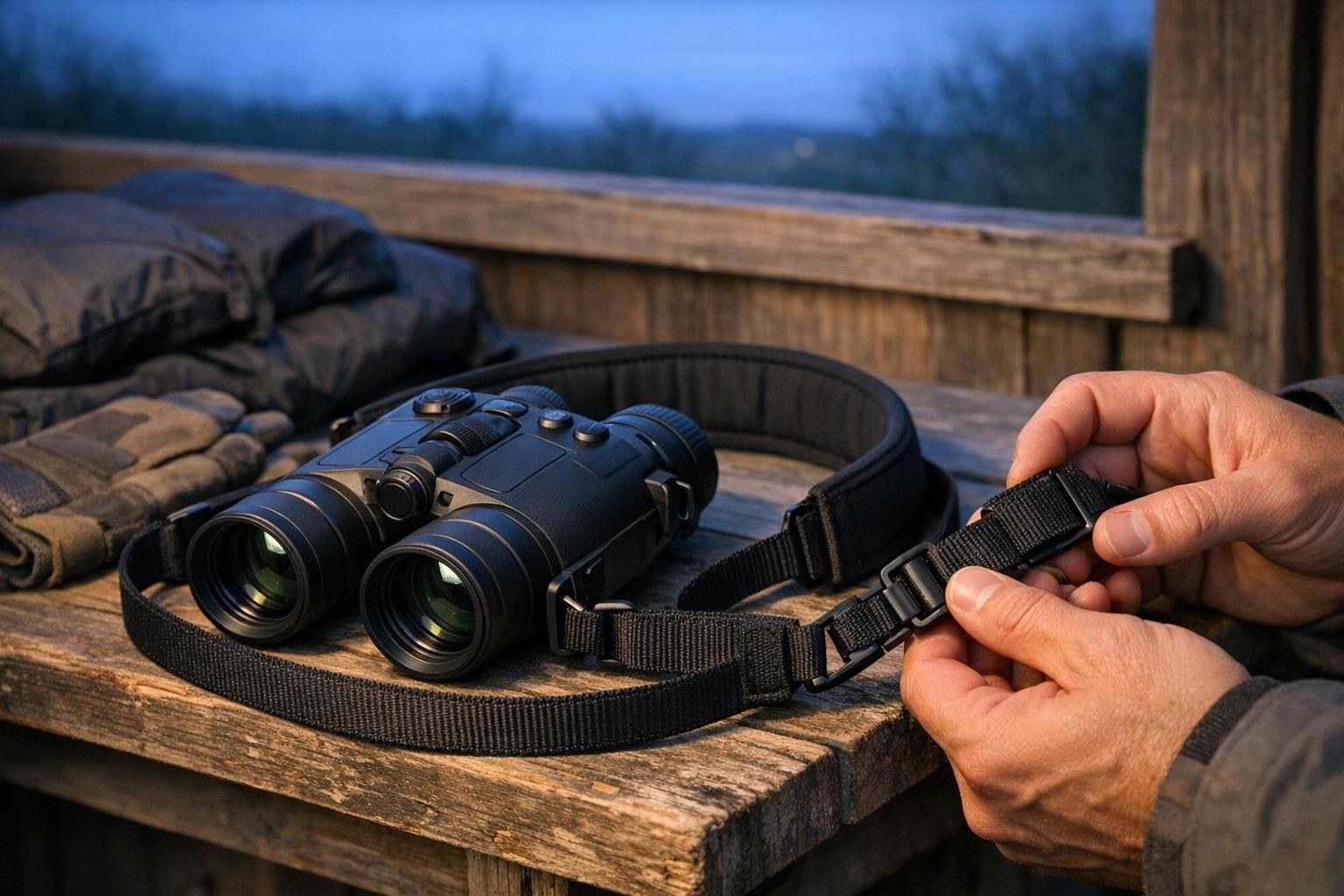
The neck strap could define the experience of your observations, whether they be positive or not. Could you bear to carry your binoculars for long periods of time, if the pressure from the strap caused soreness or even pain? Would you not want the strap to release easily from your neck, in case it got caught in your clothing? The neck strap must support the weight of the binoculars, support your style of movement and be comfortable against your neck or on your shoulders. Easy inspection of the strap for signs of wear of damage is also important.
Start with how discomfort begins
Most discomforts start with a specific spot or symptom. Determine the narrow band of pressure or a strap twist. If your binoculars keep swinging into your chest, it may be too long for you or not attached correctly. On the other hand, if your strap is too short, your binoculars might be too high for natural viewing.
In addition, one must test the strap against different clothing such as collars, coat seams and even a backpack strap on the shoulder. This test will reveal the areas of discomfort or even rub against. So a neck strap that is fine against a light shirt may cause problems with collar types, coats etc. In fact it may be uncomfortable against a t-shirt.
Match the strap to movement and carry style
Most important is how a strap fits to your way of movement. For static use a simple neck strap may be the best choice. For use on the move a strap must stay flat, not move around too much and allow the bins to rest close to your body - without hinder your hands.
If you're looking for width and padding then this will need to be spread across the neck. A wider padded strap will spread the contact across your neck and make it more comfortable. However, this can create problems under outer layers of clothing or underneath other shoulder straps. A slim line strap may be easier to pack and less obtrusive when wearing, but it can concentrate pressure in long periods of carrying.
Pay close attention to the adjustment hardware. Make sure that it is easily operated, that it will stay where you have set it and does not have any sharp edges. An adjustable strap is only good if the slider will stay in place. A strap that gradually lengthens while you are carrying the binoculars could result in the user holding the optics tightly to their chest.
Check attachment points before relying on them
Additionally, inspect the attachment points on the neck strap to the binoculars. The loops, connectors, and any retaining clips can wear over time. Check for signs of wear around the stitching, pulled threads, cracks in the plastic, bent metal, or for a connector that does not close properly. Run your finger along any sharp edges to feel for wear.
Don't assume that because you've used a neck strap before it will be safe to use on your next trip. In fact, straps can deteriorate whilst hung up in a cupboard. They can get dirty and worn, especially where they have been folded up or been in contact with other items of equipment. Inspect all connection points before you go out.
Don't use a connector that feels stiff or that opens unexpectedly, even if you can make it work by tying a knot. Likewise, don't use a strap with frayed ends to the loops. That strap may work fine for very short carries but it could fail in the field when least expected.
Adjust the fit without creating new pressure
You should measure out the appropriate length for the strap first. Then you can shorten or lengthen the strap in small increments. Test the binoculars out at a working height, looking through them while keeping your shoulders down. If you have to crane your neck to look through the binoculars then you haven't reached the end of the strap's adjustment yet. The strap should help to carry your binoculars, not the other way round.
Try the strap in both the standing position and sitting. The length of strap required can vary depending on the amount of clothing such as coat etc that you wear and how you bend forward when using the binoculars. The strap should allow for easy movement of the binoculars and not cause them to swing to one side.
The strap should allow for enough room for the binoculars to be raised and lowered and to be briefly carried in your hands. Try to avoid tightening the strap too much in order to stop the binoculars from moving. Excessive tension can lead to neck pressure and could make simple adjustments to use the binoculars very awkward.
Treat these symptoms as maintenance warnings
Continuous soreness, tingling, numbness or rubbing which causes discomfort or leads to sores, or a sore neck and/or headaches when wearing your night vision binoculars for long periods, need to be recognized for what they are -- symptoms which indicate a problem with your night vision binocular neck strap and which should cease almost immediately once the strap is removed from your neck.
Be mindful for how your Night Vision Binoculars move while you are wearing the neck strap. Pay attention for any tilting, swinging or sudden movement. Also, make sure that the neck strap does not loosen while you are wearing it. Be cautious testing out a worn or damaged connection point on hard ground, near water or anywhere where falling the equipment could potentially cause further damage.
A worn or damaged strap can cause a carrying problem that is not related to the focus, the battery or the image. If a strap has been used to carry a binocular in harsh conditions it can be damaged. A damaged strap must be replaced. Avoid using tape to repair a worn or damaged strap as this will only hide the problem until it fails.
Clean and store the setup with the binoculars
Make sure to keep the carrying strap clean and to avoid running it through under cover or soaking individual components. Pay special attention to sliders and connection points and make sure that any grit etc. does not work into them. Allow equipment that has got damp to dry out in a suitable, well ventilated area before storing it. Do not fold the strap sharply and store it with no pressure on any of the hardware.
A Night Vision Binocular Neck Strap for storing must be able to be folded up without any sharp folds, and no part of it should be under any pressure. In particular, after storage, check the webbing, the stitching, all of the adjustments, and all of the connectors.
There is no correlation between a neck strap being the most padded of neck straps and it being the best neck strap for your needs. Choose a neck strap that best supports your activity and check for any signs of discomfort or wear before your first outing. Then check your neck strap from time to time for any signs of wear or deterioration to help prevent any carrying failure which could result in interrupting your observation.